
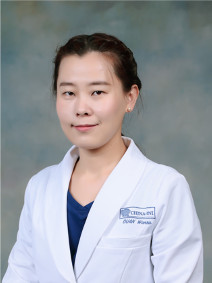
Director, Lab of Spinal Cord Injury and Functional Reconstruction
Professor of Neurosurgery
Senior Consultant Neurosurgeon
Clinical Expertise: Spinal Cord Injury,CVJ Pathologies,Spinal Tumors & Cysts,Degenerative Cervical & Lumbar Disorder
E-mail: duanwanru@xwhosp.org
Clinical Expertise
Dr. Duan practices a "precision-preservation" philosophy that minimizes epidural fibrosis while restoring native neural micro-architecture. Her surgical focus encompasses degenerative cervical & lumbar disorders (spondylosis, disc herniation, stenosis, OPLL), complex craniocervical junction pathologies (atlanto-axial instability, basilar invagination, Chiari), primary & metastatic intradural and spinal-column tumors, arachnoid/neurenteric cysts, and spinal-cord injury managed with ultra-early decompressive fusion plus closed-loop timed-sequence spinal-cord stimulation paired with robotic exoskeleton for motor and autonomic retraining.
Research Interests
Dr. Duan's work integrates neurorestoration, neuromodulation and data-driven surgical innovation. Current projects include: (1) timed-sequence spinal cord stimulation coupled with robotic exoskeletons to promote cortico-spinal and autonomic circuit re-organisation after human spinal-cord injury; (2) early-stage surgical protocols for acute spinal-cord injury and evidence-based strategies for intramedullary glioma resection; and (3) prospective clinical outcome assessment plus biomechanical validation of our self-developed anterior-lumbar and atlanto-axial instrumentation now in first-in-human trials. The overarching goal is to translate mechanistic insight into precision surgical and neuro-technological therapies that restore neurological function and quality of life.
Background
Dr. Duan is a consultant neurosurgeon at Xuanwu Hospital and serves as Professor of Neurosurgery and Director of the Spinal Cord Injury & Functional Reconstruction Laboratory at China-INI. She performs >400 surgeries annually, specialising in "precision-preservation" microsurgery for degenerative cervical/lumbar disease, craniocervical-joint malformations, intramedullary tumors and spinal-cord injury.
Dr. Duan completed her M.D. degree at Peking Union Medical College (PUMC) in 2012. She received her Neurosurgery Residency training and Specialist training at Xuanwu Hospital in 2017. Then she spent one year of scientific research in the Johns Hopkins University and trained in the Neurosurgery/spine Fellowship Programme in Xuanwu Hospital.
Dr. Duan was the Principal Investigator of a National Natural Science Foundation of China project and has directed the Laboratory at China-INI since 2020. She concurrently serves as a Young Collaborative Investigator at the Capital Medical Science Innovation Center and a Principal Investigator at the Key Laboratory of Big-Data Research and Application for Spinal Deformities, Chinese Academy of Medical Sciences. Since 2023 she has led a National Key R&D Young-Scientist Project, and she also led the first-in-human trial of timed-sequence spinal-cord stimulation plus robotic exoskeleton for neuromotor restoration after SCI.
A strong advocate for women in surgery, she has authored >40 peer-reviewed papers and holds 10 issued patents (5 translated to commercial implants).
Education
M.D., Neurosurgery, Peking Union Medical College(2004-2012)
Residencies
1. Residency Training of Neurosurgery in Xuanwu Hospital, Capital Medical University(2012-2014)
2. Specialist training of Neurosurgery in Xuanwu Hospital, Capital Medical University(2014-2017)
Fellowships
1. Fellowship training of Spine surgery in Xuanwu Hospital, Capital Medical University (2017-2018 & 2019-2020).
2. Postdoctoral Research in the Pain Research Core, Johns Hopkins University School of Medicine. (Prof. Yun Guan) (2018-2019)
3. AO Spine fellowship at Queen Mary Hospital/Duchess of Kent Children's Hospital (University of Hong Kong) (2025)
4. Short-term Visiting Scholar at Johns Hopkins Hospital, University of California San Francisco School of Medicine and University of Michigan Medical School.
Certifications
1. Physician’s practice license, 2013
2. Certificate of resident standardized training of Surgery (Neurosurgery), 2013
3. Certificated Neurosurgeon of Beijing Municipal Health Commission, 2017
4. Senior Consultant Neurosurgeon in Xuanwu Hospital, Capital Medical University, 2024
Awards & Honors
1. First Prize for Young Neurosurgeons (YNS Award) and First Prize for Women Neurosurgeons (WNS Award), National Neurosurgical Continuing Education Congress (2025)
2. First Prize (Spine & Spinal Cord Section), National Neurosurgical Clinical Skills Competition – Grand Final (2025)
3. First Prize (Medical Devices), China Medical Device Innovation & Entrepreneurship Competition– Grand Final (2025)
4. Second Prize, Beijing Hospital authority Center Science & Technology Innovation Competition (Finals) (2025)
5. Outstanding Young Editorial Board Member, Chinese Journal of Trauma
6. "National Distinguished Young Doctor – Rising Star" (2023)
7. The 16th Xinglin Physician Award, Xuanwu Hospital, Capital Medical University (2023)
8. Second Prize, China Medical Device Innovation & Entrepreneurship Competition (2022)
9. Outstanding Award, Young Neurosurgeons' Surgical Presentation, Beijing Neurosurgical Academic Annual Meeting, issued by the Beijing Branch of the Chinese Medical Association (2022)
10. Third Prize, The 2nd China Health and Longevity Innovation Competition, issued by the Chinese Academy of Medical Sciences (2021)
11. Outstanding Teacher, The First Clinical Medical College of Capital Medical University (2021)
12. Outstanding Faculty, Xuanwu Hospital, (2017)
13. Li-Ji Award for Resident Achievement, Xuanwu Hospital, (2014)
Professional Memberships
1. APCSS (Asia-Pacific Cervical Spine Society) Board Member
2. Council Member, China Women Physicians Association
3. Executive Council Member & Secretary-General, Neurosurgery Committee
4. Deputy Chair & Deputy Secretary-General, AI Rehabilitation Services Committee, China Association of Rehabilitation of Disabled Persons
5. Executive Council Member & Secretary-General, Brain-Circuit Precision Modulation Committee, China Association of Rehabilitation of Disabled Persons
6. Deputy Chair, Orthopaedic Specialty Committee, Guidelines Worth Applying (STAR Working Group)
7. Executive Council Member, Limb-Disability Division, Chinese Committee of the International Association of Neurorestoratology
8. Committee Member, Spinal & Spinal-Cord Neurosurgery Group, Chinese Medical Doctor Association
9. Committee Member, Youth Working Group, Neurorestoration Committee, Chinese Medical Doctor Association
10. Committee Member, Youth Sub-committee, Neurosurgery Expert Panel, National Health Commission Capacity-Building & Continuing-Education Center
11. Committee Member, Youth Academic Board, Chinese Journal of Trauma
12. Committee Member, Spinal-Cord Injury Rehabilitation Committee, China Association of Rehabilitation of Disabled Persons
13. Committee Member, Human Brain Bank Research Sub-committee, Chinese Society for Anatomical Sciences
14. Committee Member, Geriatric Bone & Joint Disease Branch, China Association of Geriatric Research and Healthcare
15. Committee Member, Neurosurgery Basic & Clinical Branch, Chinese Neuroscience Society
16. Committee Member, Medical Technology Innovation & Translation Committee, China Medical Education Association
17. Committee Member, Youth Orthopaedic Group, Beijing Orthopaedic Association
18. Committee Member, Big-Data & AI-in-Healthcare Committee, Beijing Health Law Society
19. Academic Committee Member, Beijing Key Laboratory of Skeletal Health & Medical Big-Data Innovation
20. Expert, Medical Dispute Expert Pool, Beijing Second Intermediate People's Court
Research & Publications
[As Corresponding author]
1. Du, Yue-Qi, et al. "C2 Anatomical Pedicle Screw for C2 Fixation under the Concept of Atlantoaxial Joint Distraction and Fusion with Intra-Articular Cages: Technical Note." European Spine Journal, Jan. 2025, doi:10.1007/s00586-025-08488-x.
2. Shao, Xuanbo, et al. "Modern Treatment of Malignant Spinal Cord Astrocytomas: A Review Article." Medical Oncology, vol. 42, 2025, p. 369, doi:10.1007/s12032-025-02873-0.
3. Shao, Xuanbo, et al. "TERT Promoter C250T Mutation in a Recurrent Cervical Chordoid Meningioma: A Unique Case Report." World Journal of Surgical Oncology, vol. 23, 2025, p. 344, doi:10.1186/s12957-025-05631-0.
4. Ding, Chenyuan, et al. "Photoacoustic Technologies in Nervous System Disorders: An Emerging Strategy for Neuromodulation." Neural Regeneration Research, vol. 21, 2026, doi:10.4103/NRR.NRR-D-24-01191.
5. Ding, Chenyuan, et al. "Subdural Hematoma After Lumbar Puncture in Patients with Coagulation Disorders: A Case Report and Pathogenetic Implications." American Journal of Case Reports, vol. 26, 2025, pp. e948707, doi:10.12659/AJCR.948707.
6. Jian, Feng-Zeng, et al. " The Biological and Functional Restoration of Spinal Cord Injury" Chinese Journal of Contemporary Neurology and Neurosurgery, vol. 24, no. 12, Dec. 2024, pp. 977–82, doi:10.3969/j.issn.1672-6731.2024.12.001.
7. Zhang, Boyan, et al. "Anterior Lumbar Discectomy and Fusion: An Effective Technique in Treating Lumbar Disc Hernniation——a Retrospective Case Study." BMC Musculoskeletal Disorders, vol. 26, 2025, p. 160, doi:10.1186/s12891-025-08688-8.
8. Xin, Zong, et al. "Spinal Neurenteric Cysts: Experience with 9 Cases via an Anterior Cervical Approach." Journal of Neurosurgery: Spine, 2024. PDF download.
9. Zhou, Mading, et al. "Posterior Intra Articular Distraction Technique to Treat Pediatric Atlantoaxial Instability." Child's Nervous System, vol. 40, 2024, pp. 2153-2160
10. Wang, Jialu, et al. "Clinical Evaluation Methods for Craniovertebral Junction Abnormalities." Chinese Journal of Surgery, vol. 62, no. 3, Mar. 2024, pp. 260-264.
11. He, Yana, et al. "Exoskeleton-Assisted Rehabilitation and Neuroplasticity in Spinal Cord Injury." World Neurosurgery, vol. 185, May 2024, pp. 45-54.
12. Qi, Maoyang, et al. "The Clinical Management and Efficacy of Metagenomic Next-Generation Sequencing in Patients with Pyogenic Spinal Infection: A Single-Center Cohort Study." Journal of Orthopaedic Surgery and Research, vol. 19, 2024, article 716.
13. Liu, Penghao, et al. "Spatiotemporal Spinal Cord Stimulation with Real-Time Triggering Exoskeleton Restores Walking Capability: A Case Report." Annals of Clinical and Translational Neurology, 2024.
14. Zhang, Bo-yan, et al. "Analysis of Failed Atlantoaxial Reduction: Causes of Failure and Strategies for Revision." Orthopaedic Surgery, 2024, pp. n/a. doi:10.1111/os.14197.
15. Du, Yueqi, et al. "Dural Defects in Anterior Surgery for Cervical Ossification of the Posterior Longitudinal Ligament." Clinical Neurology and Neurosurgery, vol. 242, 2024, 108315. doi:10.1016/j.clineuro.2024.108315.
16. Qi, Maoyang, et al. "Clinical Features and Outcomes of Basilar Invagination." Neurosurgical Review, vol. 47, 2024, 879. doi:10.1007/s10143-024-03103-7.
17. Wu, Huantong, et al. "Single-cell Sequencing Reveals VEGFR as a Potential Target for CAR-T Cell Therapy in Chordoma." British Journal of Cancer, 2024. doi:10.1038/s41416-024-02635-5.
18. Yu, Ning, et al. "IL-6 from Cerebrospinal Fluid Causes Widespread Pain via STAT3-mediated Astrocytosis in Chronic Constriction Injury of the Infraorbital Nerve." Journal of Neuroinflammation, vol. 21, 2024, 60. doi:10.1186/s12974-024-03060-9.
19. Qi, Mao-yang, et al. "A sporadic pediatric case of a spinal dumbbell-shaped epithelioid malignant peripheral nerve sheath tumor with a novel germline mutation in SMARCB1: a case report and review of the literature." Frontiers in Neurology, vol. 14, 25 May 2023, article 1178651. doi:10.3389/fneur.2023.1178651.
20. Zhang, Bo-yan, et al. "Intra-articular distraction versus decompression to treat basilar invagination without atlantoaxial dislocation: a retrospective cohort study of 54 patients." Neurospine, vol. 20, no. 2, June 2023, pp. 498-506. doi:10.14245/ns.2244910.455.
21. Jin, Tian-yu, et al. "The measurement and application of imaging evaluation parameters for cranio-cervical junction osseous and neural abnormalities: a review." Chinese Journal of Surgery, vol. 61, no. 11, Nov. 2023, pp. 1024-1029. doi:10.3760/cma.j.cn112139-20230713-00007.
22. Wang, Jia-lu, et al. "Intramedullary lipoma mimicking syringomyelia: a case report and literature review." Human Brain, vol. 2, no. 1, 15 Mar. 2023, article HB.2.326. doi:10.37819/hb.2.326.
23. Liu, Peng-hao, et al. "Postoperative spinal 18F-FDG PET pseudoprogression mimicking malignancy." Clinical Nuclear Medicine, vol. 48, no. 8, Aug. 2023, pp. 702-703. doi:10.1097/RLU.0000000000004708.
24. Zhang, Bo-yan, et al. "Application of oblique lumbar interbody fusion using anchored spacers in treatment of lumbar degenerative diseases: a primary clinical study." Chinese Journal of Contemporary Neurology and Neurosurgery, vol. 22, no. 8, Aug. 2022, pp. 696-705.
[As First author]
1. Du Y, Duan W, Qi M, et al. Mapping, classification, and surgical strategy for vertebral artery variation in posterior atlantoaxial joint release, distraction, and fusion surgery for basilar invagination and atlantoaxial instability. J Neurosurg Spine. 2025. doi:10.3171/2024.12.SPINE24185.
2. Duan W, Du Y, Chen Z. Microsurgical Resection of a Recurrent Neurenteric Cyst Through an Anterior Cervical Approach: 2-Dimensional Operative Video. Oper Neurosurg. 2025. doi:10.1227/ons.0000000000001615.
3. Liu P, Huang J, Duan W, et al. FET PET provides adjunctive value to FDG PET in distinction of spinal cord tumors. Heliyon. 2024;10:e33353.
4. Spine and Spinal Cord Group in Neurosurgical Society of Chinese Medical Association, Chinese Craniovertebral Junction Malformation Research Alliance, Craniovertebral Junction Malformation Alliance of National Center for Neurological Disorders. Expert consensus on posterior facet distraction and fusion technique for the treatment of atlantoaxial dislocation (2024). Chin J Surg. 2024;62(8):725–730. DOI:10.3760/cma.j.cn112139-20240508-00229
5. Duan W, Zhang B, Qi M, et al. Surgical treatment strategy for difficult‐reducible atlantoaxial dislocation. Natl Med J China. 2022;102(43):3443–3448. DOI:10.3760/cma.j.cn112137-20220427-00940
6. Duan W, Zhang B, Li X, et al. Single-Cell Transcriptome Profiling Reveals Intratumoral Heterogeneity in Human Chordomas[J]. Cancer Immunology, Immunotherapy: 2022, 71(9): 2185-2195.
7. Duan W, Chou D, Jian F, et al. Microsurgical Anterior Controllable Antedisplacement Fusion to Treat Cervical Ossified Posterior Longitudinal Ligament: 2-Dimensional Operative Video[J]. Operative Neurosurgery (Hagerstown, Md.), 2021 Feb 16;20(3):E221
8. Chen Z, Duan W*, Dean C, et al. A Safe and Effective Posterior Intra-Articular Distraction Technique to Treat Congenital Atlantoaxial Dislocation Associated With Basilar Invagination[J]. Operative Neurosurgery, 2021(4):4. (Chen Z and Duan W are co-first authors)
9. Duan W, Chou D, Jian F, Chen Z. Navigated transoral odontoidectomy to treat congenital basilar invagination after failed posterior reduction and fusion. Neurosurg Focus Video. 2020 Jul 1;3(1):V8.
10. Duan W, Chou D, Jian F, et al. Posterior intra-articular distraction with cage placement to treat congenital atlantoaxial dislocation associated with basilar invagination[J]. Neurosurgical Focus: Video, 2020, 3(1): V2.
11. Du YQ, Duan WR, Chen Z, Wu H, Jian FZ. Predictors for Development of Symptomatic Myelopathy in Patients with Radiculopathy Caused by Cervical Ossification of Posterior Longitudinal Ligament. World Neurosurg. 2019 Apr;124:e710-e714.
12. Huang Q, Duan W, Sivanesan E, Liu S, Yang F, Chen Z, Ford NC, Chen X, Guan Y. Spinal Cord Stimulation for Pain Treatment After Spinal Cord Injury. Neurosci Bull. 2019 Jun;35(3):527-539
13. Duan W, Chou D, Jiang B, Liu Z, Zhao X, Xia Z, Jian F, Chen Z. Posterior revision surgery using an intraarticular distraction technique with cage grafting to treat atlantoaxial dislocation associated with basilar invagination. J Neurosurg Spine. 2019 Jul 5;31(4):525-533.
14. Duan W, Huang Q, Chen Z, Raja SN, Yang F, Guan Y. Comparisons of motor and sensory abnormalities after lumbar and thoracic contusion spinal cord injury in male rats. Neurosci Lett. 2019 Aug 24; 708:134358.
15. Duan W, Du Y, Qi T, Jiang B, Wang K, Liu Z, Guan J, Wang X, Wu H, Chen Z, Jian F. The Value and Limitation of Cervical Traction in the Evaluation of the Reducibility of Atlantoaxial Dislocation and Basilar Invagination Using the Intraoperative O-Arm. World Neurosurg. 2019 Dec;132:e324-e332.
16. Duan W, Liu Z, Guan J, et al. Reduction of the atlantoaxial dislocation associated with basilar invagination through single-stage posterior approach: using Xuanwu occipital-cervical reduction surgical suite. Chin J Surg. 2019;57(10):782–787.
17. Du YQ, Duan WR, Chen Z, Wu H, Jian FZ. Risk Factors and Management of Dural Defects in Anterior Surgery for Cervical Ossification of the Posterior Longitudinal Ligament. World Neurosurg. 2018 Mar;111:e527-e538.
18. Duan WR, Xie YK. Modulation of C-nociceptive Activities by Inputs from Myelinated Fibers. Adv Exp Med Biol. 2016;904:33-40
19. Duan WR, Lu J, Xie YK*. Mechanisms of topical analgesics in relieving pain in an animal model of muscular inflammation, Pain Med,2013, 14(9):1381-1387
Any use of this site constitutes your agreement to the Terms and Conditions and Privacy Policy linked below.
A single copy of these materials may be reprinted for noncommercial personal use only. "China-INI," "chinaini.org" are trademarks of China International Neuroscience Institute.
© 2008-2021 China International Neuroscience Institute (China-INI). All rights reserved.